

Why Do I Overthink Every Decision?

You need to answer a text.
Choose a preschool.
Decide whether to take the new job.
Book the hotel.
Tell your boss whether you can take on another project.
Some decisions are legitimately big. But somehow, your brain can turn all of them into a full investigation.
You research. You make a pros and cons list. You ask three people what they would do. You finally decide, then immediately start wondering if you made the wrong choice.
If you’re constantly overthinking decisions, the problem probably isn’t that you’re bad at making them.
You may actually be very good at making decisions.
The problem is that anxiety has convinced you there’s a perfect choice out there, and if you think hard enough, you can guarantee you’ll find it.
Unfortunately, life doesn’t work that way.
Why Do I Overthink Every Decision When I’m Usually So Capable?
This is what makes decision anxiety so frustrating for high-achieving women.
You’re capable everywhere else.
People come to you when they need something figured out. You’re the person who researches the pediatrician, compares insurance plans, manages the family calendar, and somehow remembers the random thing your kid needs for school on Thursday.
So why can choosing what to do next feel so hard?
Because high achievers often aren’t simply trying to make a good decision.
You’re trying to make the right decision.
And those are two very different things.
A good decision leaves room for uncertainty.
The “right” decision is supposed to guarantee that you won’t regret anything, disappoint anyone, waste money, make life harder, or look back six months from now and wish you’d chosen differently.
That’s an impossible standard.
Anxiety Makes Decisions Feel More Dangerous Than They Are
When anxiety gets involved, a decision stops being a decision.
It starts feeling like a prediction.
You’re not just asking, “What do I want?”
You’re asking:
What if I regret this?
What if this makes things harder for my family?
What if I’m missing something?
What if everyone else thinks this is a bad idea?
What if Future Me is furious with Current Me?
So you keep thinking.
The goal isn’t really to find more information anymore. It’s to reach a level of certainty where you finally feel safe choosing.
That’s why anxiety making decisions can create such an exhausting loop.
You aren’t looking for an answer.
You’re looking for a guarantee.
Overthinking Decisions Can Look Like Being “Responsible”
This pattern is easy to miss because anxiety doesn’t always look anxious.
Sometimes it looks incredibly responsible.
You research every possible option before booking a vacation.
You reread an email five times because you don’t want the tone misunderstood.
You spend weeks deciding whether your child should switch schools because you want to make the best choice for them.
You rehearse a conversation with your boss because you don’t want to say the wrong thing.
From the outside, this looks thoughtful.
And you are thoughtful.
But there’s a point where gathering information stops helping you make a decision and starts helping you avoid the discomfort of making one.
That’s the line worth noticing.
Why High-Achieving Women Struggle With Decision Anxiety in Boston, Massachusetts
For high-achieving women in Boston, Massachusetts, there’s often no shortage of decisions to make.
Career decisions. Parenting decisions. Financial decisions. Relationship decisions. Household decisions.
And if you’re already carrying most of your family’s mental load, you’re making hundreds of tiny choices before you’ve even finished your first coffee.
Decision fatigue is real.
Add perfectionism and anxiety to that mental load, and suddenly choosing between two perfectly acceptable options can feel weirdly impossible.
You’re not indecisive.
Your brain is overloaded and putting too much pressure on every choice.
The Problem With Trying to Make the Perfect Decision
Here’s the annoying truth.
Sometimes both choices are good.
Sometimes both choices have downsides.
Sometimes you won’t know whether something was the “right” decision until much later.
And sometimes you’ll make a choice that doesn’t work out.
That last one tends to be especially uncomfortable for perfectionists.
But becoming more confident in your decisions doesn’t come from eliminating mistakes.
It comes from trusting yourself to handle what happens afterward.
That’s a very different kind of confidence.
Instead of asking, “How do I make sure nothing goes wrong?”
You start asking, “Can I trust myself to respond if it does?”
How to Stop Overthinking Decisions
The next time you’re stuck, first ask yourself whether you actually need more information.
If there’s a meaningful fact you’re missing, go find it.
If you’ve already Googled it fourteen different ways, texted your best friend, asked your husband, and read Reddit threads from 2019, you probably don’t need more data.
You need to choose.
Give smaller decisions a time limit. Not every choice deserves unlimited access to your brain.
Then ask yourself a different question:
“Which option makes the most sense with what I know right now?”
Not forever.
Not if you could see the future.
Right now.
Finally, practice making low-stakes decisions without checking them with someone else first.
Choose the restaurant.
Send the email.
Buy the shoes.
Let your brain experience the uncomfortable feeling of maybe without immediately trying to make it disappear.
That’s how self-trust gets built.
Overthinking Can Become Part of Burnout
Constant decision-making takes energy.
Constantly second-guessing those decisions takes even more.
If you’re already managing work, kids, relationships, appointments, household logistics, and everyone else’s needs, spending another hour debating whether you made the correct choice is draining a system that’s already overloaded.
Over time, that can contribute to irritability, exhaustion, difficulty concentrating, and feeling like your brain simply cannot handle one more thing.
If that sounds familiar, you can learn more about burnout and overwhelm therapy in Massachusetts here.
Therapy isn’t about teaching you the “correct” decisions either.
It’s about helping you understand why uncertainty feels so uncomfortable and building enough trust in yourself that you don’t need every decision to come with a guarantee.
You Don’t Need to Be 100% Sure to Make a Decision
This might be the biggest shift.
Confidence doesn’t always come before the decision.
Sometimes it comes after.
You choose based on the information you have. You tolerate the little wave of but what if? that shows up afterward. Then you keep moving instead of reopening the case every six hours.
You learn that uncertainty isn’t an emergency.
You learn that regret isn’t inevitable.
Most importantly, you learn that if something doesn’t work out exactly as planned, you’re capable of dealing with that too.
Your goal isn’t to become someone who never overthinks.
It’s to become someone who doesn’t need absolute certainty before trusting herself.
Ready to Spend Less Time Second-Guessing Yourself?
If anxiety is turning every decision into a mental marathon, you don’t have to keep thinking your way out of it.
You can learn to make decisions with more confidence, tolerate uncertainty, and trust yourself without needing to know exactly how everything will turn out.
If you’re ready to start digging in and making change, reach out here to book a session.
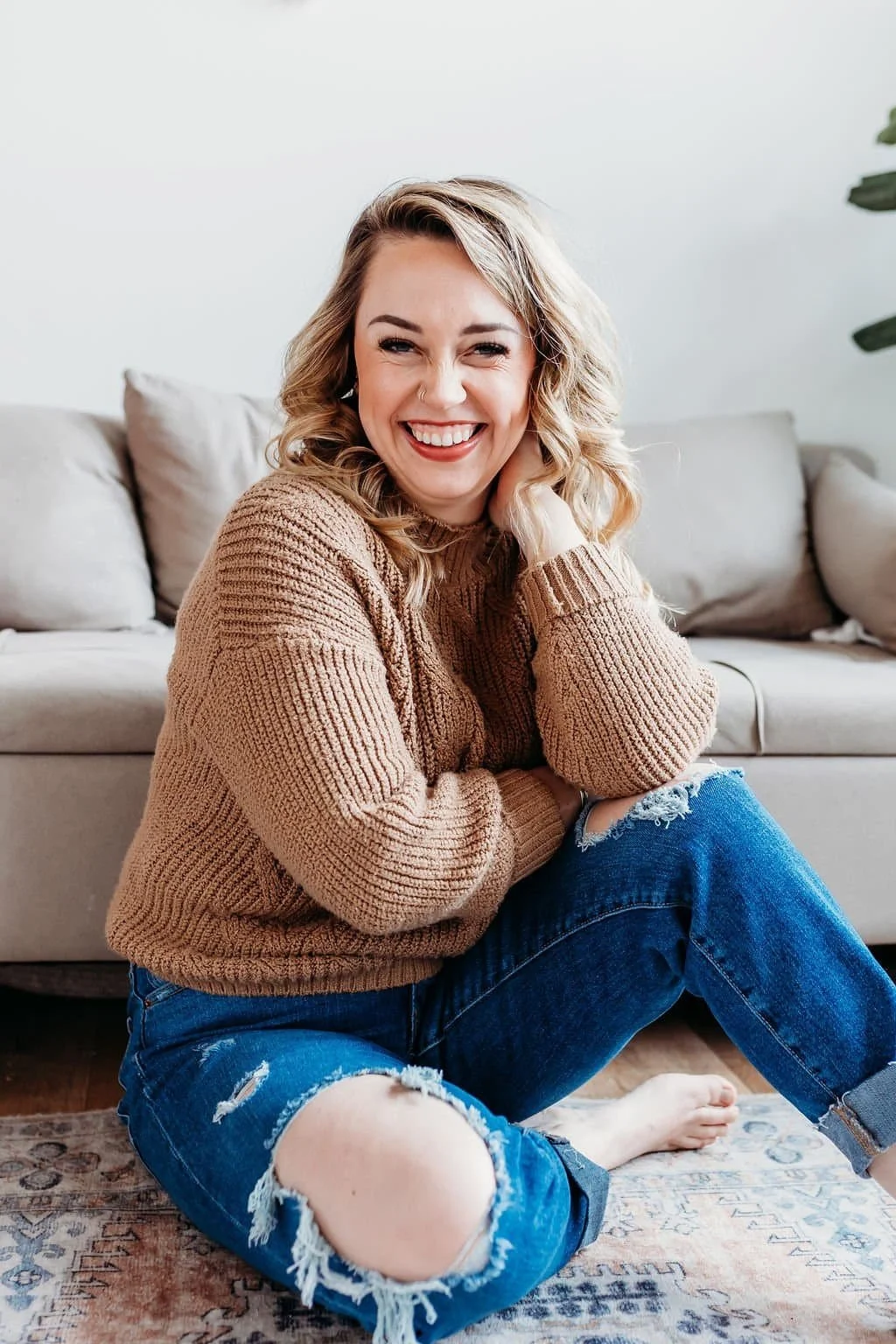
Megan Kolb, LICSW, ACSW, is a Licensed Independent Clinical Social Worker and founder of MK Wellness Collective with 10 years of experience helping high-achieving millennial women and moms navigate anxiety, burnout, perfectionism, and the invisible mental load of everyday life.
Using a blend of CBT, mindfulness, somatic therapy, attachment-informed and trauma-informed care, Megan helps clients feel less overwhelmed, regulate their nervous systems, build healthier boundaries, trust themselves more, and become more present in their relationships and daily lives. She specializes in anxiety, high-functioning anxiety, maternal mental health, pregnancy and postpartum concerns, and emotional regulation, and provides online therapy for women and moms throughout Massachusetts and New Hampshire.
